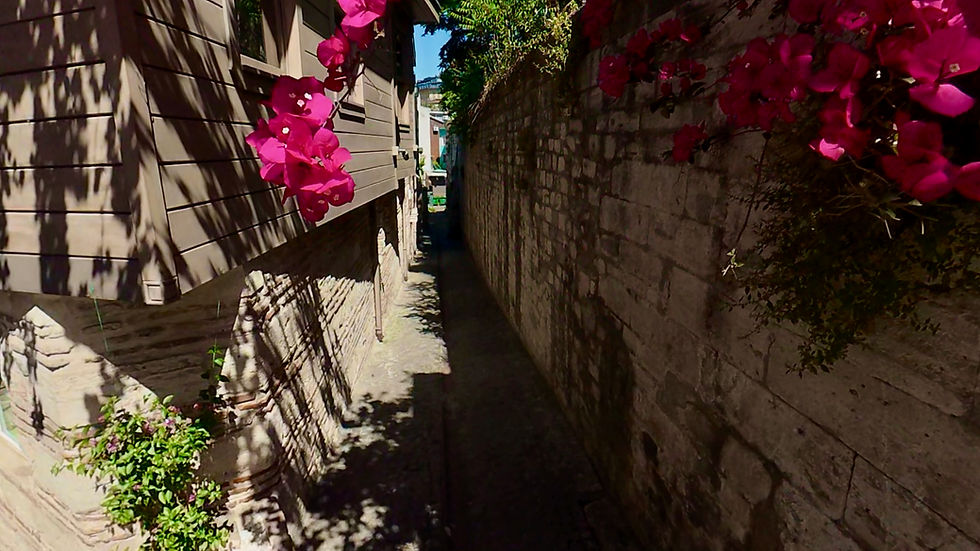
You think it’s just a statue in Istanbul. Look behind it


Right behind the newly restored Sirkeci Post Office in Eminönü stands a statue of a hamal - a traditional porter.
If you enjoy the blog, you can support it by buying me a virtual coffee
The statue is a symbol of the Ottoman answer to what many years later became known as “delivery riders”. But not everything belongs to the past. Beneath the statue lie carrying bags and baskets still in use today - and the hamals themselves sit right beside it, waiting for the next job.
For centuries, men like these were responsible for moving goods through Istanbul. Goods arrived by ship to Eminönü and Sirkeci and were then carried further into the city - from warehouses to shops, from one trader to another, through narrow streets and up staircases where carts, and later vehicles, simply could not get through. Everything was carried.
Today, most of that work has been taken over by vans and modern logistics. But not all of it. In the streets around Eminönü and Tahtakale, there are still short distances where it is simply easier to carry something than to transport it by vehicle. Narrow passages, steps and dense commercial streets mean the job still exists - just on a much smaller scale.
That is why they are still there. Not as a remnant of the past, but because there is still a need. Often older men, taking on the jobs that do not fit into the modern system.
There is also another story that keeps resurfacing.
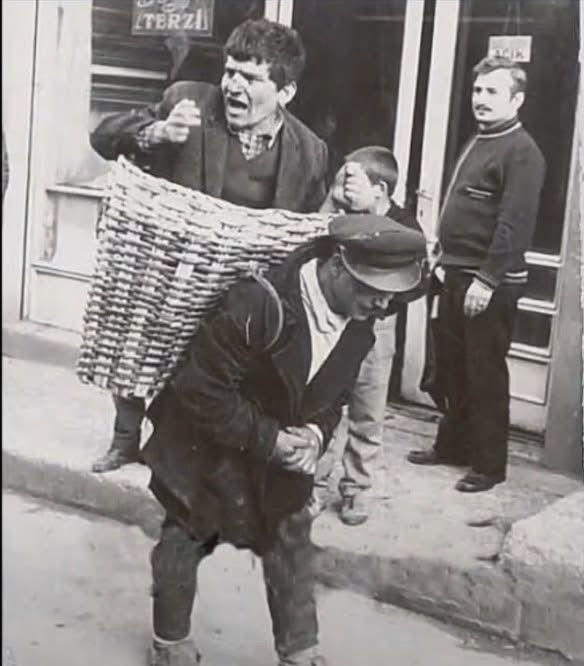
That hamals were used to carry drunk customers home from taverns. The images exist, and they are often shared with exactly that explanation. Some of the well-known photographs are clearly staged scenes from the late 19th century. Others look more like everyday snapshots from a later period - but even here, several observers suggest the scenes may have been staged.
It does not look like a real situation. The “drunk” behaves more like a caricature than someone actually being carried through the city - in what appears to be broad daylight.
It suggests it may have happened.
But there is no indication that it was a regular or organised part of the job.
It may have occurred.
But it is unlikely to have been what hamals made a living from. Fixed arrangements between taverns and hamals are rejected by local historians.
What remains is the work itself.
The statue is still there.
The bags are ready.
And the men sit right beside it.
And if it should happen, you could in theory skip Uber and test the myth of getting a lift from a hamal - I cannot guarantee it will work.